Most HOA boards live in one of two failure modes. Mode one: every email gets forwarded to every board member, every homeowner complaint becomes a thread of seventeen replies, every minor decision generates a dozen messages, and the board members who care the most burn out the fastest because they're trying to read everything. Mode two: the property manager filters everything, the board sees a one-page summary at the monthly meeting, and homeowners feel ignored because their concerns disappear into a process they can't see. Neither mode is good governance. Neither is anyone's fault. Both are infrastructure problems.
The infrastructure problem is that information about a community — what's happening, what's been decided, what's pending, what homeowners are saying, where the money is — lives in seven different places: the property manager's inbox, the board chair's text messages, the treasurer's spreadsheet, a paper file in the clubhouse, three different vendor portals, the bank's online system, and someone's memory. No single board member can see the whole picture without spending eight hours a week assembling it. Most don't have eight hours a week. So they don't see the picture, and they make decisions with partial information, and good decisions become accidents rather than the default.
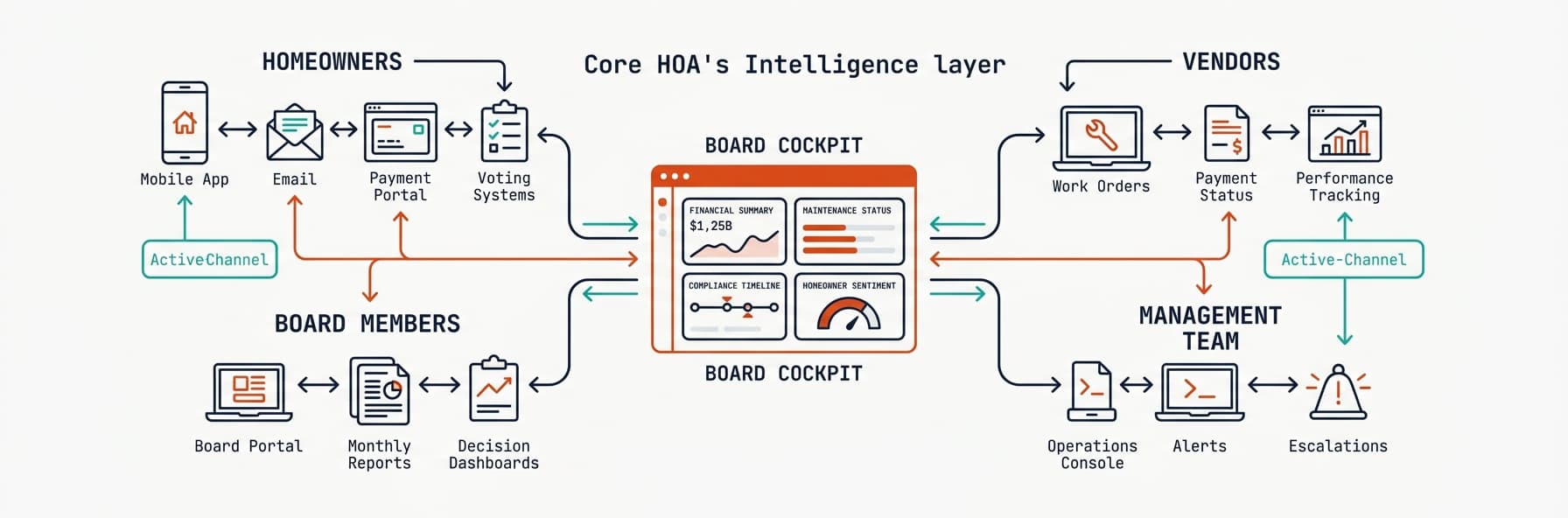
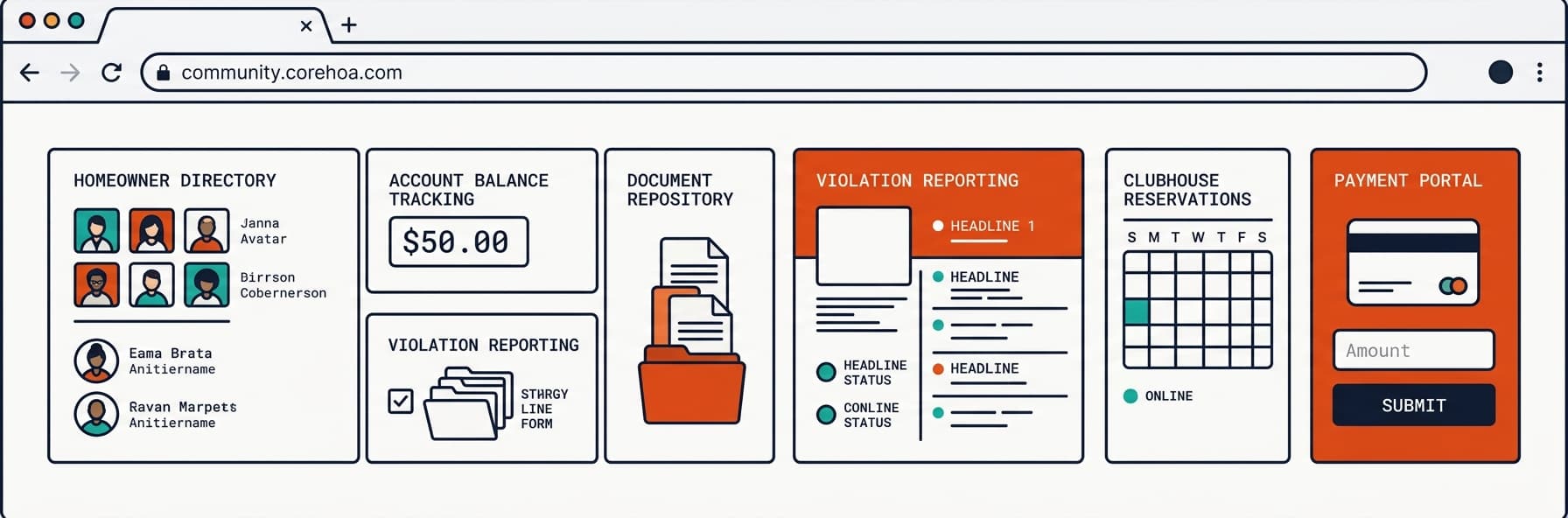
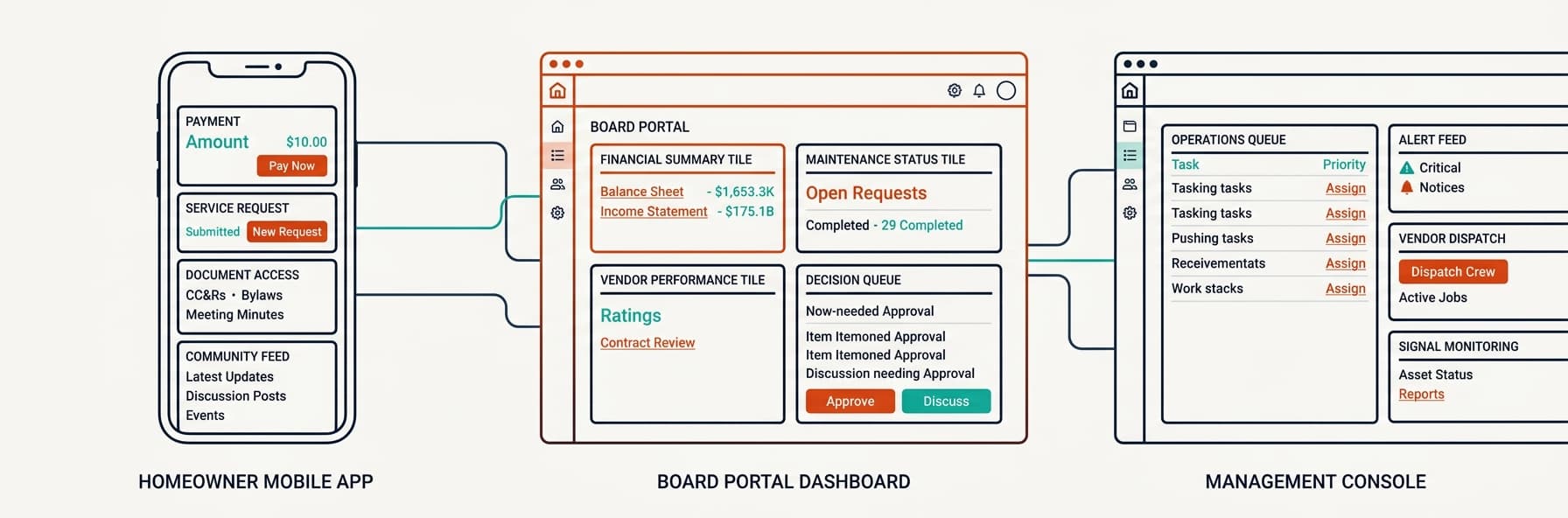
Core HOA's experience layer puts the picture in one place. Board members see what they need to make decisions, when they need to make them — financial visibility in real time, maintenance status without asking, homeowner sentiment surfaced as patterns rather than individual complaints. Homeowners see where their dues go, when their requests get addressed, what the board is actually doing. The information stops being scattered and starts being structured. Your meetings become decisions, not discoveries.